
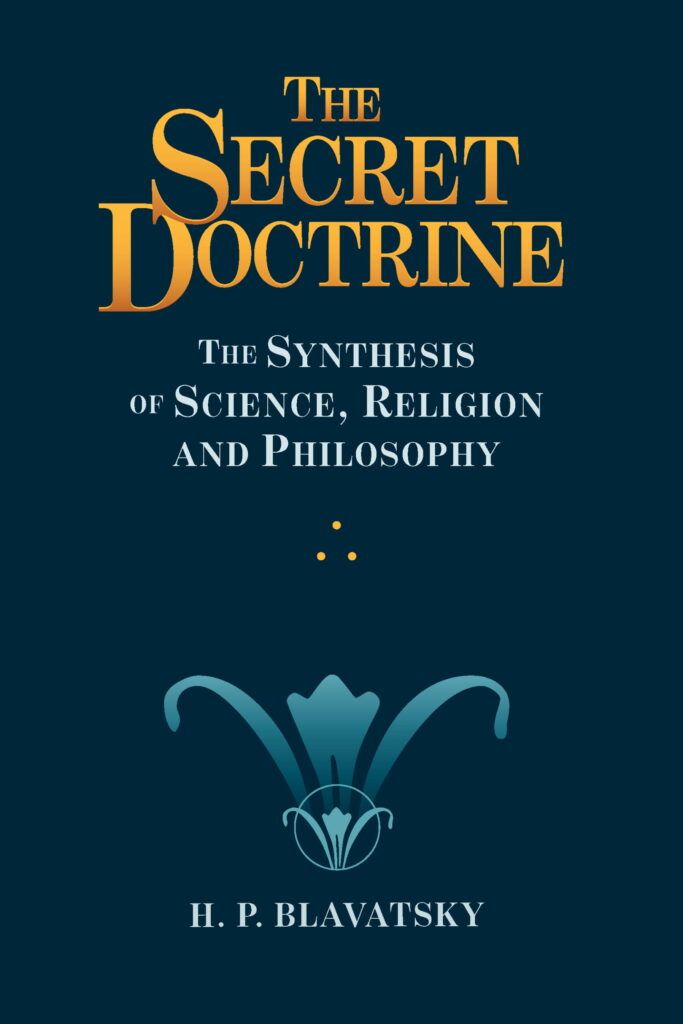
We are pleased to announce the publication of a newly prepared edition of The Secret Doctrine by Helena Petrovna Blavatsky, completed after more than five years of sustained editorial work. This edition arose from the practical need to transition from plate-based facsimile printing to a digitally prepared format suitable for contemporary printing methods. In doing so, we sought to preserve the original pagination, structure, and visual character of the 1888 first edition, while also taking the opportunity to address demonstrable errors that have long accompanied the text.
Editorial Work and Method
As the project unfolded, careful attention was given to verifying quotations and references, correcting clear typographical mistakes (including some acknowledged by Blavatsky herself), and bringing foreign terms into consistent and readable spelling conventions. Diagrams have been clarified for legibility, and citation inaccuracies have been corrected where reliable sources permitted. Throughout, the guiding principle was restraint: no change was introduced unless it could be shown to improve accuracy without altering meaning.
The New Edition
The result is an edition that remains page-for-page and line-for-line in continuity with the 1888 first edition, while quietly removing obstacles that have complicated study for generations of readers. It is offered in a spirit of stewardship—intended to preserve the integrity of Blavatsky’s work while making it more reliable as a reference for scholars and more accessible to students of Theosophy today.
For the past century a great many students have relied on the photographic facsimile reprints issued by The Theosophy Company. We present this new edition as a careful and considered development in the continuing effort to safeguard and transmit the writings of H. P. Blavatsky.
The Secret Doctrine, first published in 1888, was written by Madame H.P. Blavatsky to establish an authentic record of the teachings of the Theosophical philosophy. Its aim, as stated in her Preface, was “to show that Nature is not a ‘fortuitous concurrence of atoms,’ and to assign to man his rightful place in the scheme of the Universe; to rescue from degradation the archaic truths which are the basis of all religions; and to uncover, to some extent, the fundamental unity from which they all spring. . .”
The original two-volume edition was the only one published during the lifetime of Madame Blavatsky. By 1925 it was long out of print and had become scarce. In that year The Theosophy Company published the first photographic facsimile of the original edition, making it again widely available. It has been reprinted several times, most recently in 2004.
The present publication is an updated and corrected reproduction of the first edition of 1888. This departure from a facsimile arises from the fact that modern information technology has greatly facilitated access to nearly all the numerous works quoted and discussed by the author, making practicable the verification of quotations and citations. Mistakes found in the source citations have been corrected, missing citations have been added and existing ones expanded, so that interested students may more easily locate these often-obscure sources. Obvious typographical errors have been corrected. English transliterations of foreign language terms and characters have been updated and made consistent throughout. Finally, an in-house developed typeface was used, similar to the original, which allowed the exact preservation of the original pagination. Great care has been taken that none of these changes would have any effect on the author’s meaning or intent.
THE THEOSOPHY COMPANY
May 8, 2025
The Theosophy Company has published a photographic facsimile edition of The Secret Doctrine (SD) since 1925. Over the decades, periodic reprintings were undertaken to maintain availability. These reprints relied on traditional mechanical printing methods based on photographic plates of the original text. With the advancement of modern printing technology, however, plate-based reproduction has become increasingly impractical.
This led The Theosophy Company to reconsider how a faithful, verbatim edition of the SD might continue to be produced. The decision was made to prepare a newly formatted digital edition, enabling the creation of high-quality digital files (PDFs) suitable for contemporary printing methods. At the outset, the intention was to preserve the work in verbatim form—retaining the original pagination, diagrams, and sketches, and developing a customized typeface that would reproduce as closely as possible the appearance of the 1888 first edition.
The preparation of this digitally reconstructed text extended over several years. The original volumes were carefully scanned, the text and images brought into editing software, and the pagination reconstructed in precise alignment with the 1888 first edition. Once all pages had been entered and formatted, detailed proofing could begin.
During the early stages of proofing, it became evident that certain minor corrections would be necessary. A number of clear typographical and spelling errors were identified, and the decision was made to amend them. In addition, there are several instances in which Blavatsky herself acknowledged mistakes introduced by printers or editors and indicated that they should be corrected in a subsequent edition (see The Secret Doctrine Dialogues, pp. 146, 226, 397, 415, 496, 514). These corrections were likewise incorporated.
As proofing progressed, attention turned to the many instances in which Blavatsky quoted from contemporary authors. In a number of cases, passages drawn from such works were reproduced in The Secret Doctrine together with the original author’s footnotes, references, and citations. However, the contemporary source from which Blavatsky herself was quoting was not always explicitly identified. As a result, it could appear that Blavatsky was directly consulting or citing the various authorities listed in those footnotes, when in fact she was reproducing a secondary source along with its scholarly apparatus.
In order to clarify these instances, our proof-readers made use of resources such as the Theosophical Society (Pasadena)’s Secret Doctrine References series, Boris de Zirkoff’s edition of The Secret Doctrine, and a range of digital research tools to trace and verify the quotations in question.
This investigation revealed two difficulties. First, it is not always immediately evident that a passage is a quotation, nor is the identity of the quoted author consistently clear. Second, when inaccuracies existed in the citations of the contemporary source, those inaccuracies were carried forward into the SD without independent verification.
In response, we undertook a systematic effort to clarify and, where possible, regularize such instances. Quotation marks have been supplied where the boundaries of quoted material were previously unclear. When pagination permitted, references to the contemporary source from which Blavatsky was drawing have been added to assist readers in tracing the immediate source. In addition, where citations inherited from those sources were found to be demonstrably incorrect, they have been corrected on the basis of accessible archival and digital materials.
These interventions are intended not to reinterpret Blavatsky’s work, but to make more transparent the textual pathways through which her sources entered the SD, thereby enabling students and researchers to follow them with greater confidence. Those who wish to examine this matter in greater detail may consult the Theosophical Society (Pasadena)’s Secret Doctrine References series, which carefully traces many of the contemporary works from which Blavatsky drew and illustrates the patterns described above.
While verifying quotations and references, another editorial question arose. Blavatsky sometimes reproduced passages from contemporary sources with small but deliberate alterations. In many instances, these adjustments appear intended to emphasize a particular idea, clarify a perceived error in the original author’s reasoning, or underscore issues within a translated passage.
The most prominent updated edition of the SD to date is that prepared by Boris de Zirkoff and his collaborators. A notable methodological difference between that edition and the present one concerns the treatment of such quotations. In the de Zirkoff edition, quotations are generally restored to the exact wording of the verified source text (where such sources could be identified). In the present edition, Blavatsky’s adjustments have been retained on the premise that they were often intentional and integral to her presentation. This approach reflects our effort to preserve her interpretive voice while still verifying the underlying references.
During the course of this work, a broader assessment of the original 1888 printing emerged. It became increasingly clear that the first edition did not receive the degree of professional proof-reading and editorial oversight that a work of its scope would ordinarily require. Historical evidence suggests that the volumes were brought to press under time constraints, and much of the editorial labor was undertaken by devoted but non-professional assistants. The typesetting process likewise seems to have been executed with limited opportunity for proof-reading and revision. This perspective is shared by J. M. Pryse, Manager of the “HPB Press” (which printed many of Blavatsky’s writings), who said of the SD that:
“. . . it was obvious to any one familiar with the literary and mechanical details of book-publishing that the manuscript of the S.D. had not been properly prepared for the printer, and that the proof-reading had been so carelessly done that even glaring grammatical errors, inadvertently made by the author, had been allowed to stand.”
The result is a text that, while monumental in intellectual scope, contains numerous irregularities that more careful editorial preparation might have eliminated. In an ideal publishing context, extended proofing prior to final printing would likely have reduced many of these issues. Recognizing this historical reality contributed significantly to our conclusion that a strictly photographic or mechanically verbatim reproduction would not fully serve the work or its readers. Thoughtful corrective intervention, within clearly defined limits, was therefore judged necessary.
It is important to note that Blavatsky was not a native English speaker and was herself acutely aware of her limitations in the language. She repeatedly stated that she lacked confidence in her English and, during the last years of her life, routinely submitted her writings to G. R. S. Mead for correction prior to publication. When preparing The Secret Doctrine (1888), she explicitly asked Archibald and Bertram Keightley to “read, punctuate, correct the English, alter, and generally treat it as if it were [their] own,” urging them to “make it into right English.” The Keightleys, however, declined to undertake substantive editorial revision, limiting themselves to minimal corrections. As a result, the 1888 edition preserves much of Blavatsky’s original phrasing, including foreign turns of expression and grammatical irregularities. Only later writings, particularly after Mead’s arrival in 1889, were systematically “Englished” under her approval, and the 1893 revised edition of The Secret Doctrine reflects that process.
In preparing the present edition, we frequently encountered passages in the 1888 text whose sentence structure can be difficult to follow, whose punctuation may seem unusual to modern readers, and whose phrasing allows more than one plausible interpretation. These features are not defects of carelessness, but reflect the linguistic circumstances under which the work was written and first published.
For this edition, we have chosen to preserve the wording of the 1888 text as it stands, without attempting to regularize or modernize the English. Where ambiguities occur, they have been retained rather than resolved editorially. This approach should not be understood as a criticism of later revised editions, which were prepared under different conditions and for different purposes. Our aim has been to preserve as faithfully as possible the wording of the 1888 edition, respecting both its strengths and its difficulties as part of the historical document itself.
In addition to the textual issues described above, another recurring difficulty became apparent during proofing. Throughout the SD, Blavatsky employs a wide range of foreign terms—Sanskrit, Chinese, Tibetan, Greek, Hebrew, and others. In several cases, especially where Hebrew appeared in its original script, the typesetting in the 1888 printing contains frequent inaccuracies.
It also became clear that Blavatsky often adopted the spelling conventions of the contemporary sources from which she was drawing. Neither the editors nor the printers appear to have undertaken any systematic effort to standardize the transliteration of foreign terms. Thus, when citing French-language sources, French transliteration conventions were frequently retained; when citing English-language works, English conventions were used instead. These systems differed considerably from one another, and there was little uniformity even within each linguistic tradition at the time. In addition, many nineteenth-century authors relied on simplified phonetic spellings or individualized renderings of non-Western terms.
The result is that identical terms often appear in multiple variant spellings across the SD. While such variation reflects the historical conditions of its composition, it presents practical challenges for indexing, searching, and sustained scholarly study.
In addressing these inconsistencies, our aim was not to modernize the SD according to contemporary academic transliteration systems, but to introduce a reasonable degree of internal consistency while preserving the historical character of the 1888 first edition. Variant spellings were therefore examined individually, and decisions were made to correct clear misspellings, regularize diacritical usage, and align differing forms of the same term wherever this could be done without distorting the original presentation.
In certain cases—Egyptian terminology being a notable example, where French-based spellings predominated—adjustments were made toward more widely recognized modern forms. Such decisions were guided by practical considerations: the SD should facilitate serious study and research, and inconsistent or erroneous spellings should not create unnecessary obstacles to that end.
Accordingly, foreign terms have been adjusted, wherever feasible, to conform to commonly accepted transliterations, while the typographical formatting and overall stylistic character of the nineteenth-century edition have been carefully preserved. For example, Sanskrit diacritics have been kept in forms consistent with nineteenth-century usage rather than fully updated to later scholarly conventions (e.g. â rather than ā).
No change has been introduced without a high degree of certainty that a genuine error was present and that the correct reading could be verified. In several instances, apparent irregularities were carefully examined but ultimately left unaltered because sufficient evidence for correction could not be established. Where doubt remained, the original reading has been preserved.
Because The Secret Doctrine has been extensively cited since its original publication, particular care was taken to preserve the original pagination. In addition, a line-for-line correspondence with the 1888 first edition has been maintained, so that the first and last word of each line in the present edition matches that of the original, except in rare cases where necessary corrections affected line length. The result is a volume that closely mirrors the structure and appearance of the 1888 edition, while incorporating the limited corrections described above.
The sketches, diagrams, and tables appearing in the 1888 edition have likewise been carefully restored. In some cases, faint or degraded images were digitally enhanced; in others, diagrams were redrawn with close attention to the original design. These adjustments were made solely to improve legibility and reproduction quality, while remaining faithful to the form and placement of the original illustrations.
The Index was the first portion of the work to undergo detailed review. A substantial number of errors in its page references were identified—averaging approximately 40 per page across the Index’s 30 pages—and considerable time was devoted to verifying and correcting the page citations associated with each indexed term.
At the same time, it should be recognized that the original 1888 index reflects the editorial and production circumstances under which the work was prepared. Its structure and scope are limited and differ from later, more comprehensive indexing efforts undertaken by various Theosophical organizations. Those subsequent projects have provided valuable tools for study and research.
The present edition retains the original index, with page numbers corrected, in order to preserve the integrity and overall character of the historical volume. One of the guiding principles of this project has been to reproduce a text that remains as close as possible in form and structure to the 1888 first edition, while addressing clear errors. For this reason, the index has not been replaced or substantially restructured.
Although the page references in the Index have been corrected, certain spellings later standardized in the main text were not retroactively altered in the Index due to publication timelines. As a result, while the Index now points accurately to the relevant pages, some entries retain their earlier forms even where standardized spellings now appear in the text. This decision was made in order to complete the present edition without further delay, while preserving continuity with the historical form of the work.
Alongside the preparation of the present printed edition, a complementary online edition of the SD has been developed and is being progressively expanded. In this digital format, editorial interventions are more comprehensive. Spelling conventions are being brought into alignment with contemporary scholarly standards; references are presented in fuller detail and organized separately from the original footnotes; and diagrams are being redrawn according to modern typographical conventions.
The purpose of this online project is not to replace any printed edition, but to provide a dedicated research tool for scholars and serious students. While preparing the printed edition, extensive documentation was compiled by our editors and proof-readers, recording each change, the rationale for its adoption, and the supporting sources consulted—most often drawn from digitized archival collections. These materials are now being incorporated into a structured “Table of Updates” associated with the online edition, with the aim of creating a transparent and well-documented record of all editorial revisions made to the 1888 first edition.
This online undertaking is intended as a long-term scholarly project. As of the present publication, revisions have been implemented throughout the text in a phased manner; the first eighty pages have been fully updated and reflect the intended format and level of documentation that will characterize the completed digital edition.
We recognize that some theosophists hold, as a matter of principle, that The Secret Doctrine should not be edited in any respect. This position is understandable and rests on several considerations.
Historically, the writings of H. P. Blavatsky were not always transmitted with consistent editorial care. In certain periods, modifications were introduced without clearly articulated justification, and her teachings were sometimes reframed through later interpretive systems. Over time, a variety of tendencies emerged in post-Blavatsky theosophical literature, including:
It was in response to such developments that The Theosophy Company undertook, beginning in 1925, to reprint a photographic facsimile of the 1888 first edition. The aim was to ensure that the text remained available in its original form, without later overlays or reinterpretations. That commitment to textual integrity remains foundational to the present project.
A second and equally significant consideration arises from the position Blavatsky occupies in the lives of many theosophists. For some, she is regarded not merely as an author or philosopher, but as a teacher of singular importance. Her writings are therefore approached with a degree of reverence analogous, in certain respects, to the way sacred texts are approached within religious traditions.
This attitude of respect and trust is deeply understandable. The Theosophy Company likewise affirms that Blavatsky’s writings deserve careful preservation and serious consideration. Any editorial intervention must therefore proceed with restraint and humility.
These considerations have long supported the conviction that Blavatsky’s writings should not be altered in any way that affects their meaning. In preparing the present edition, particular care has been taken to respect this principle.
Although numerous corrections and standardizations have been introduced, each proposed change was subjected to careful review. The guiding question in every case was whether the alteration would in any way modify the substance or intention of the passage. Where there was not complete agreement among the editors, the original reading was retained. The aim throughout has been to correct demonstrable errors while preserving the integrity of Blavatsky’s thought.
A further objection sometimes raised is the view that every detail of the original printing—including typographical irregularities—was intentionally placed and may encode hidden meanings. Some have suggested the existence of a numerical or symbolic system embedded within the text.
Our extended examination of the SD, including detailed verification of quotations, references, and typographical inconsistencies, does not support this conclusion. The presence of numerous demonstrable printing errors and inherited citation inaccuracies indicates that the 1888 edition reflects the practical conditions of its production. While the text undoubtedly rewards careful and contemplative study, it is best approached through contextual and philosophical analysis rather than through speculative interpretations of accidental typographical features.
Since its original publication in 1888, The Secret Doctrine has appeared in several significant forms. A “third edition” was issued in 1893 under the editorial supervision of G. R. S. Mead, introducing numerous changes without extensive documentation of their rationale. Beginning in 1925, The Theosophy Company undertook to preserve the 1888 first edition through photographic facsimile reprints, ensuring continued access to the text in its original published form. Later, a major editorial project culminated in the Centennial Edition prepared by Boris de Zirkoff and issued in 1978, incorporating its own corrections and editorial judgments.
The present volume represents The Theosophy Company’s first updated edition of The Secret Doctrine. It departs from strict photographic reproduction while maintaining the pagination, structure, and general appearance of the 1888 first edition. At the same time, it differs in method from other edited versions by combining carefully verified corrective interventions with a deliberate effort to preserve Blavatsky’s textual presentation wherever possible. The preparation of this edition extended over more than five years of sustained editorial review, research, and careful verification.
Throughout this undertaking, the guiding principle has been restraint. No change has been introduced without careful examination, and no alteration has been permitted to affect the meaning or intention of the text. Where uncertainty remained, the original reading has been preserved. The aim has not been to reinterpret Blavatsky’s work, but to present it in a form that remains faithful to its historical character while removing obstacles created by acknowledged inaccuracies of printing and transmission.
We offer this edition in a spirit of stewardship and service to students and scholars of Theosophy. It is intended to stand alongside the longstanding facsimile reprints and the developing online scholarly edition as part of an ongoing effort to preserve, clarify, and make accessible the writings of H. P. Blavatsky.
Comments and questions regarding this edition are welcome and may be addressed to the publisher, The Theosophy Company, at 245 West 33rd Street, Los Angeles California USA 90007, or digitally using the contact form below.